Sidebar

Litsea tree - Litsea monopetala
Description and Uses
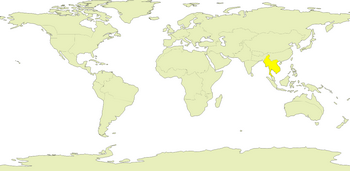
Litsea monopetala (Litsea tree) is a tropical tree from South East Asia. It is mainly grown for its oil crops (medium shelflife), The crop is harvested by ground gathering. After 45 years the tree can be totally removed as it reached its commercial and ecological goal. Litsea monopetala has a lifespan of 70 years.
Environmental limitations
The tree is 18 meters tall. It is medium growing and tolerates not less light than partial shade. Litsea monopetala has a shallow root-system and forms symbiotic relations (endo-mycorrhiza). It is not able to fix nitrogen. The tree`s flower-morphology is hermaphroditic and is pollinated by insects.
Litsea monopetala thrives in an altitude of 0 to 1500 meters above sea-level (tropical). The minimum temperature is 9°C and optimally between 22 - 30°C. The optimal rainfall is 2400 mm/year. Without irrigation the annual rainfall should be between 900 - 3000 mm (L/m²). The optimal soil-pH is between 5.0 - 7.0 in a soil texture of loam. To salt it is intolerant to wind and to fire intolerant.
Pests and Diseases
and diseases.
Seed Propagation
Seeds are recalcitrant and can be stored for 5 months. There are approximative 22500 seeds/kg. Unfortunately propagation instruction is missing.


- Botanical Taxonomy -
|
|
|---|---|
| Clade | Magnoliids |
| Order | Laurales |
| Family | Lauraceae |
| Sub-family | Lauroideae |
| Species | Litsea monopetala |
| Common name | Litsea tree |

| Parameter | Rating |
|---|---|
| Fruit | 0.00 |
| Nut | 0.00 |
| Apiculture | 0.00 |
| Fodder | 0.00 |
| Medicinal | 0.00 |
| Oil | 0.00 |
| Timber | 0.00 |
| Firewood | |
| Grow-speed | medium |
See also |
|
|---|---|
Completed species |
|
|---|---|
|
|
|